We can still dance if we want to.

Lately, NYC feels over-run by tourists chasing high-end shopping, and Instagramable moments, but on a recent Saturday night, my faith in New York City as a place for the weird and wonderful was restored. It was 80s night at Hotel Chantelle. My friends and I had been talking about how long it had been since we went out dancing, so we had been keeping an eye out for the right place and time. When word got out that the DJ from the famous and now-closed Pyramid Club was still doing select local gigs, it felt like the perfect opportunity. Giggling, as we hustled down the stairs to the club space which sounded like it was blaring early Duran Duran, we reached a sparse dance floor with an interesting cast of characters who, like us, had arrived early. The lights were a little too bright, making everyone visible and giving the impression that we were all together in someone’s parents’ basement, which somehow seemed appropriate. Most people seemed to have come by themselves or with one other person. There were no gaggles of girls or large parties. Very few were drinking and despite the elegant surrounding banquettes, absolutely no one was seated. Everyone was there to dance.

A slight man with a thin gray beard and a black suit and tie, was very focused, extending his arms and legs in a repetitive jumping jack kind of move towards the center of the floor. Next to the DJ booth, a blond woman in a head-to-toe purple bodysuit, sipped a drink, while taking small delicate steps back and forth in her white stilettos. Towards the back, a middle-aged couple, made space for us on the dance floor, as they lip synched to each other “You are an obsession, you’re my obsession…” – she, with short red hair in a white and blue sweatshirt, and he, a more effeminate version Mr. T in a lumberjack shirt, complete with one gold dangling earring. Soon, a tall athletic guy with long black dreads wrapped up tightly in a wide headband rushed onto the dance floor. He placed a gym bag next to the DJ booth and quickly got to work on the most high-impact dance moves of the night. It was as if he had just come from the gym where he had already lifted weights and was coming in to complete the cardio section of his workout. The others made room for him and nodded as if they knew him, then each got back to their own business of dancing. In fact, while there was some acknowledgement of other people on the dance floor during the night, most people were swept up by the music and having their own personal experience. As were we.

It was a chance to lose ourselves in the music and the nostalgia. We were able to block out everything else in the world and just dance. A good reminder that we were in the best city in the world to do just that.

How are you? Todo bien por suerte

One of the first things I noticed when I started going back and forth between the U.S. and Argentina is the difference in how people greet each other. Like many countries in the world outside the U.S., in Argentina people kiss each other even when they’re meeting for the first time (and even when the people are both men.) This is something I wasn’t really used to. In general, the Argentinians seem to place a stronger emphasis on greeting each person individually.

When I brought my husband Lucas to my office in NYC, I had neglected to explain that in the U.S., when meeting large groups of people for the first time, typically one long wave for the whole group is sufficient. So, when I briefly introducing my six colleagues by name with a general wave in their direction, I smiled patiently as he walked over and slowly greeted each of them individually – men with a careful handshake (I had told him that men in the U.S. would not expect a kiss) and each of them women with a kiss (which, thankfully, was met unilaterally with delight.) Now, there is certainly something very nice about this kind of deliberate greeting. In the U.S., we’re just not accustomed to this.

But, what really caught my attention in Argentina is the spoken greeting that usually comes after the kiss. Sometimes, the greeting is the equivalent of something familiar like Como anda? How’s it going? or Que tal? What’s up? But often, the greeting is Todo bien? followed by Todo bien por suerte. The first part struck me as kind of surfer-speak that I would translate like All good (dude)? but the response – All good, luckily – seems to say that they don’t expect things to be good, but luckily, they are.

This idea of not expecting things to be good seems to be a core part of the Argentinian shared experience, possibly from decades of governmental corruption and public systems not functioning as they should. Is the United States heading in that direction with the current state of upheaval in our administration? It feels like it. I wonder if it will have an impact on our lexis in the U.S. someday. Will we start to develop a sense of gratitude? An understanding that despite it all, we are lucky?

An awakening…

Washington, CT – I woke up at 6am, two days after the election on the morning of November 7th, to the sound of the local garbage truck and a crowd cheering. The applause and the “yays” and “woohoos” were so loud that they almost drowned out the noise of the truck, which was parked at the Four Corners. This was incredible because there is almost never any noise here. The Four Corners is where Plumb Hill, Judea Cemetery Road, Bell Hill and East Street meet. The house I grew up on is on one corner, there’s another house across the street on the another corner and the other two are occupied by a meadow and a wooded area respectively. The only noise we ever hear comes from the occasional vehicle that speeds through the four-way STOP sign because they assume there’s nothing there.

Looking out my bedroom window surreptitiously, I was surprised to see that all the noise seemed to be coming from just two jubilant dog walkers and the garbage man, himself. At first, with the window closed, it was hard to make out what the three of them were yelling about, but pretty quickly my stomach turned as I made out the words “We’re gonna make America great again!!” I was shocked. While our town is known to have Republicans (the Town Selectman, for example) most of the people we know are not only left leaning, but pretty progressive teachers and artists, many of whom (including my parents) were former New Yorkers. But I had no idea that there were MAGA people living among us. Who were these dog walkers and the garbage man? And how did they think that Trump was going to make anything great?

I realize what that sounds like as I write this – either that I’m talking about aliens or zombies or that I’m talking about people for whom I have little respect. And now, a few weeks later, I also realize even more that this massive disconnect within communities is exactly the problem, and that it’s how Trump got elected. I tried to listen harder without opening the window and revealing myself, so I couldn’t really make out what they were saying, but through the cries of joy there was a lot of shouting – a LOT of anger.

A few days later, while the Democrats in the news still weren’t helping me make heads or tails of what happened apart from what seemed like obvious racism and misogyny, it was my younger cousin from Rhode Island who helped me better understand what happened. He told me that we needed a candidate who was angry because so many people in our country are angry. People who didn’t go to college, and even those who did, but still struggled to make a living are angry because unlike their parents they just cannot afford to buy a house, to pay their bills and these days, they can’t even afford groceries. They didn’t feel like any administration had really helped them. They didn’t believe the Democrats had helped and all they heard was condescension. Trump reflected back their anger and made them feel seen.

This was a wake-up call in more ways than one.

Tales from Two Cities and A Town

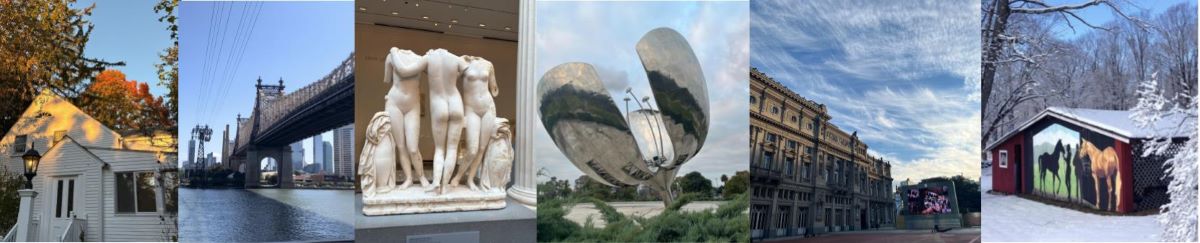
For the past five years, my life has existed in three places – New York City, Buenos Aires and the small town of Washington, CT where I grew up. My husband Lucas is Argentinian with two young sons that live half of the time with their mom in Buenos Aires. I live most of the time in Manhattan, but I often hop up to CT to check in my parents, as I’m their only child. My dad recently passed away, so now it feels even more important to check in on my mom. Lucas and I go back and forth between countries, doing our best to never be apart for more that six weeks at a time. It’s admittedly a crazy way to live our life. Yet somehow, we make it work. It’s lucky, it’s wonderful, it’s hard and sometimes disorienting. This new blog is an experiment to try to capture some of the things I’ve learned while living in all three places at the same time.